
Pearl Sweet: More than a name, national legacy
Uganda’s new crude-oil identity can become a powerful commercial brand and a foundation for lasting national wealth.
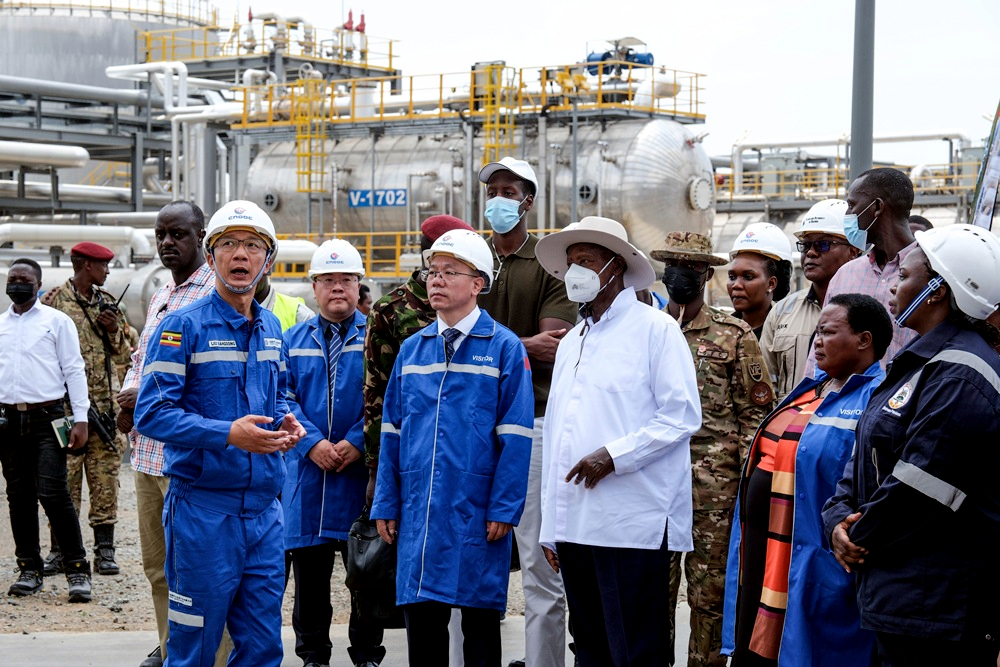
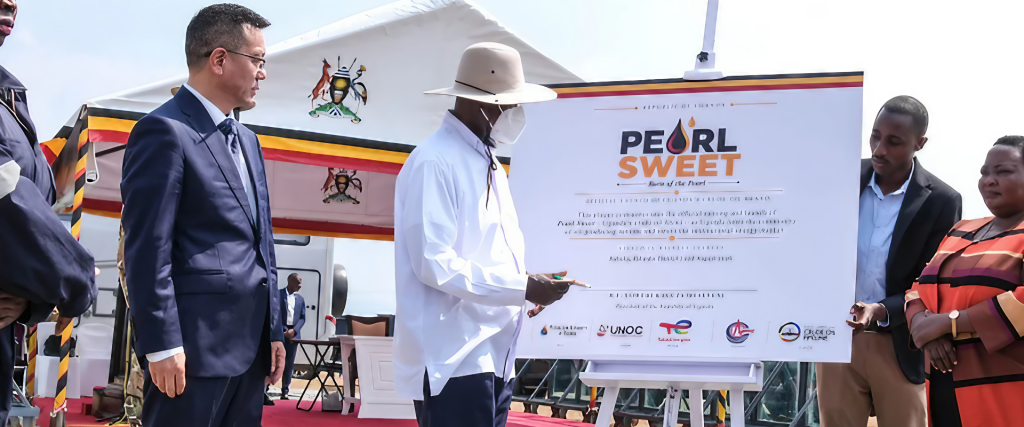
Uganda has arrived at a defining moment in its economic history. For decades, petroleum was largely a story of exploration, geological surveys, discoveries, negotiations, and anticipation. Today, that story is moving from expectation to production. Against this historic background, President Yoweri Museveni unveiling the name “Pearl Sweet” for Uganda’s crude oil carries significance that extends far beyond the naming ceremony. It is the beginning of an identity for Uganda’s crude oil.
President Museveni said “Sweet” reflects the crude’s low sulphur content, while “Pearl” captures Uganda’s long-standing identity as the Pearl of Africa. The Ministry of Energy and Mineral Development has similarly said the name reflects both the characteristics of Uganda’s crude and the country’s national identity.
The combination is both symbolic and commercially relevant. Oil is traded in an international market where different crude grades are distinguished by their physical and chemical characteristics. Sulphur content, density, viscosity, wax content, and other properties influence transportation, refining requirements and commercial value. Uganda’s Kingfisher crude is described as waxy and low in sulphur. Its wax characteristics require it to be kept hot during transportation. The Kingfisher Central Processing Facility is designed to handle approximately 40,000 barrels of oil per day, with the processed crude expected to enter the 1,443 km East African Crude Oil Pipeline to Tanga in Tanzania.
This makes a clearly defined Ugandan crude identity important.
Around the world, crude grades have developed recognizable commercial identities. Brent and West Texas Intermediate have become internationally recognized references in the petroleum industry. Uganda has an opportunity to develop Pearl Sweet into a similarly recognizable identity for its own crude, supported by accurate technical information and consistent market standards.
FROM NAME TO COMMERCIAL GRADE
The value of Pearl Sweet will ultimately depend on what the name represents.
A name alone cannot command a premium in the international petroleum market. Buyers consider the technical quality of crude, reliability of supply, transportation arrangements, contractual certainty, refinery compatibility and the prevailing market conditions.
For this reason, Pearl Sweet should be accompanied by a clear and authoritative crude oil specification.
The specification should consistently establish the relevant characteristics of the crude, including sulphur content, API gravity, viscosity, wax content, pour point, and other parameters important to transportation, refining, and commercial valuation. Uganda’s petroleum legal framework already provides a strong foundation for this approach. The Petroleum (Exploration, Development and Production) Act, 2013 established the Petroleum Authority of Uganda and provides for regulation of petroleum activities, measurement of petroleum, optimal recovery and efficient petroleum operations. The law also provides for standards and methods relating to the measurement of petroleum produced, processed and transported.
Consequently, Pearl Sweet can be developed within Uganda’s existing petroleum regulatory architecture as a clearly identified commercial crude grade. The name gives the oil an identity; science gives that identity credibility.
IMPORTANCE OF LEGAL RECOGNITION
The legal dimension is equally important. Uganda does not need to create an entirely new petroleum law simply because its crude has acquired a name. Instead, the relevant institutions can ensure that the designation is appropriately reflected in applicable petroleum standards, technical documentation, measurement systems, marketing arrangements, and other relevant regulatory instruments. Such institutional recognition would provide continuity and protect the integrity of the Pearl Sweet designation.
The Petroleum (Exploration, Development, and Production) Act was designed to ensure that Uganda’s petroleum resources generate optimum benefits for present and future generations while promoting national content, transparency, and accountability. The Petroleum (Refining, Conversion, Transmission, and Midstream Storage) Act, 2013, similarly provides the legal framework for midstream petroleum operations, including standards, measurement, transmission, and refining.
The Pearl Sweet identity should, therefore, be anchored in this broader framework of law, measurement, transparency, and accountability. A commercially recognised crude grade must be one whose quantity and quality can be trusted.
IMPORTANCE OF LEGAL RECOGNITION
The legal dimension is equally important. Uganda does not need to create an entirely new petroleum law simply because its crude has acquired a name. Instead, the relevant institutions can ensure that the designation is appropriately reflected in applicable petroleum standards, technical documentation, measurement systems, marketing arrangements, and other relevant regulatory instruments. Such institutional recognition would provide continuity and protect the integrity of the Pearl Sweet designation.
The Petroleum (Exploration, Development and Production) Act was designed to ensure that Uganda’s petroleum resources generate optimum benefits for present and future generations while promoting national content, transparency, and accountability. The Petroleum (Refining, Conversion, Transmission, and Midstream Storage) Act, 2013, similarly provides the legal framework for midstream petroleum operations, including standards, measurement, transmission, and refining.
The Pearl Sweet identity should, therefore, be anchored in this broader framework of law, measurement, transparency, and accountability. A commercially recognised crude grade must be one whose quantity and quality can be trusted.

REAL VALUE LIES BEYOND THE BARREL
The name of Uganda’s crude is important, but the greater national significance lies in what petroleum wealth will accomplish. Oil is an exhaustible resource. Once extracted and consumed, a barrel cannot be replaced. The financial value, generated from that barrel, however, can be converted into assets that remain, long after petroleum production declines.
President Museveni has consistently said petroleum revenues should not be squandered on consumption and luxury imports but should contribute to durable investments for future generations. At Kingfisher, he reiterated the importance of using petroleum income to build lasting infrastructure and productive assets. This principle should guide Uganda’s petroleum era.
Oil revenues can contribute to electricity generation, transport infrastructure, industrialization, education, healthcare, technology, agriculture, and human capital development. The objective should be to transform temporary petroleum wealth into permanent national capacity.
LESSON FROM OTHER PRODUCERS
Norway provides a useful international example. The country established a long-term framework for managing petroleum revenues and created the Government Pension Fund Global to preserve and invest petroleum wealth for current and future generations. Norway’s experience demonstrates the importance of strong institutions, fiscal discipline, and long-term thinking in managing revenues from an exhaustible natural resource. Uganda has its own economic circumstances and institutions and should develop solutions suited to its national priorities. Nevertheless, the underlying principle remains relevant: petroleum wealth should be converted into sustainable wealth rather than consumed as temporary income.
The writer is the NRM Chairperson of Kiruhura district and holds a Master of Laws in Oil and Gas.